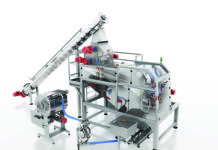
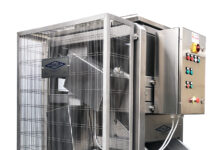
真空冷却
对于熟食,如烘焙产品,产品在包装前必须完全冷却。如果没有观察到这种情况,包装内冷凝的水蒸气会导致产品的成型,或者包装材料中存在的物质(通常不适合与温热的食物接触)迁移到产品中。然而,对许多食品加工商来说,等待产品完全冷却是一个“死时间”,而且会造成实际的物流问题,因为这会占用好几个小时的空间,延长生产周期,最后还会造成经济损失。由于这个原因,冷却过程通常通过使产品通过冷却通道来加速。快速冷却新鲜烘焙的产品涉及高能耗,更不用说凉爽的环境可能会对某些产品产生负面影响,特别是烘焙食品,加速它们的老化过程。利用真空冷却可以克服这些限制。真空技术在食品工业中已经被了解和应用了几十年。它的物理原理类似于干冷冻,通过在真空下蒸发水分来冷却含有游离水的湿产品:当水分从产品中蒸发时,潜热被带走,从而使产品均匀冷却。水的蒸发温度其实并不是固定的,而是由大气压力决定的:压力越低(真空逐渐增大),开始蒸发水分的温度就越低。空气吸入系统保持压力在预先设定的真空水平。 The cooling effect is rapid and uniform all over the product. Vacuum cooling is far quicker than conventional/ conduction cooling in ambient air or refrigerated environment, and is mainly used in the bakery sector. The reduction in cooling times is more obvious with larger products: from several hours to a few minutes. Quick cooling provides that temperature ranges (from approx. 60° to 20 °C), at which microbial spores can germinate, are very short: a very important issue for stuffed baked goods.

真空冷却技术的有效性和结束过程所花费的时间并不取决于被加工产品的数量(与冷却槽或隧道中发生的情况相反)。最后,非常快速的冷却为应用这项技术的公司节省了大量的资金和能源。真空冷却的一个可能的问题是,与传统系统相比,产品的重量损失更高。事实上,在真空冷却过程中,产品中含有的部分自由水在面包片内部转化为水蒸气(这与室温或冷藏冷却的情况不同):这可以解释重量略微下降的原因。然而,产品内部较低的水分率可以改善产品质量,延长其保质期。此外,真空冷却技术提供了一个更均匀的水分分布在产品内部,从而使烘焙产品更少的外壳和海绵内部。与其他冷却技术相比,真空冷却的主要优点是将合适的产品冷却到给定的温度所需的时间很短。传统的冷却方式(如冷库和冷却隧道)利用从产品传递到周围空气的热量通过对流或传导。众所周知,这些过程是缓慢的,特别是在没有强迫空气的情况下;此外,食物和空气之间的低热量Δ会减缓它们的速度。 Furthermore, they are less effective in case of low surface to volume ratio, especially for large products (difficulty to cool to the centre of the product). An important parameter to be taken into account is the energy consumption of this equipment, considering the long processing time for reducing the temperature to acceptable levels, and the floor space required for cooling in tunnels or storage rooms. Vacuum cooling provides additional advantages, especially in the case of bakery products, including extension of crust life, improved volume and softness: In fact, these products offer improved texture, shape, and moisture distribution with less collapse and contraction, increased shelf life. Next to making the cooling process more rapid, especially for products like bread, vacuum can be effectively used to improve the texture and volume of bakery products. Since the entire product is exposed to the cooling action, it is certain that even the centre of the product is cold, or better is cooler than its outside (very important issue for stuffed products). The product shape stabilisation is obtained thanks to the pressure reduction, thus eliminating the loss of volume (ca. 10%) which is typical for convection cooled products. Process parameters are constant and reproducible, and the end result is independent from external environmental conditions (temperature, humidity, etc.); furthermore, there is the short time required to cool, with obvious advantages in terms of organization, economy and hygiene: with conventional forms of cooling such as air blast, water immersion and cold storage, in fact, the product must be kept in environments that are exposed to contamination risks and/or that may favour the development of moulds or other micro-organisms. Vacuum cooling may be advantageously used even for products like pizza, puff pastry, traditional celebration cakes, and pastry products.
文学
1.L. Garcia-Gonzales等人,2007年。高压二氧化碳灭活食品中的微生物。国际食品微生物学杂志,117:1-28
由弗拉维奥Gibilras