

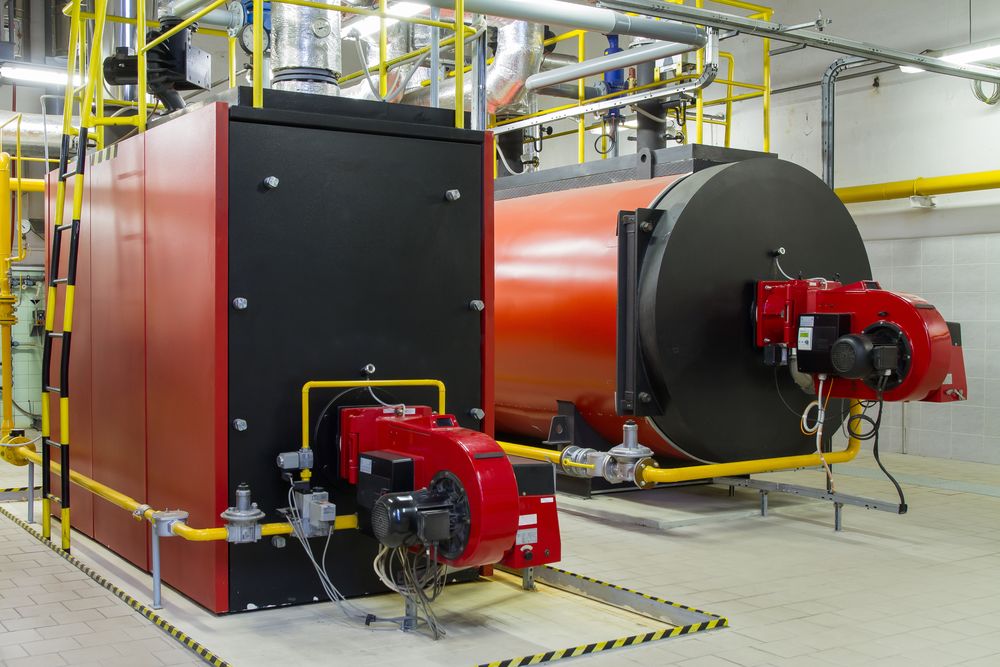
在一个或多个阶段加热的食品工业过程占绝大多数:加热仍然是减少或实际上消除食品中微生物风险的最广泛的手段之一。此外,加热是烹饪食物所必需的,从而使食物变得更软、更顺滑、更易于消化,总的来说更开胃。许多其他操作也需要加热,如预灌装阶段的包装卫生,包装食品的巴氏杀菌或灭菌,设备、表面和一般食品工厂的清洁和卫生程序。热量通常通过热水输送,热水通常由锅炉产生。锅炉是两相流换热设备:一边是沸腾的流体,另一边是单相或两相流。如果该设备能够以一种可控的、连续的方式使水从液体变为蒸汽,它也被定义为“蒸汽发生器”。锅炉产生的热水/蒸汽通常被强迫进入热交换器,热交换器是一种设备,热量从热流体转移到冷流体/质量,通常通过一个薄的隔离墙,可以采取各种各样的几何形状:金属结构如管(管壳式、多管式、双管式或管中管式换热器等)或板(垫片板或矩阵式和板翅片管式换热器等),以间接接触食品/饮料并向其传递热量。较少的情况下,热交换不是通过金属壁,而是热水/蒸汽和食物/液体之间有直接接触,即牛奶处理的加热过程。在这个特定的例子中,加热水的质量必须是食品级的; in all other cases (no direct food/beverage contact), feed-water microbiological quality is not paramount but other parameters are, as mineral content, in order to prevent fouling. Fouling is the accumulation of undesirable substances on a surface, and can rapidly diminish heat exchange efficiency and increased pressure drop in boiler equipments, especially in presence of an high surface area to water quantity ratio. Fouling of heat transfer surfaces introduces one of the major uncertainty factors into the design and operation of boilers.

锅炉结构主要特点是:
- 燃烧器/炉子:是否进入燃料提供热能的器官并燃烧。燃料碳含量和大气氧的几乎其特征混合物送出通过热对流和向锅炉罐照射漫射的火焰。
- 罐/蒸发器:它含有由燃烧器/炉加热至蒸发温度的液体(通常是水)。
- 过热器:是一个重要的锅炉配件,旨在提高效率,将饱和蒸汽(或“湿”蒸汽)转化为“干燥”蒸汽。过热通常是指增加200℃和15巴以上蒸汽温度的过程,以提供蒸汽的额外热量,以便增加其温度而不会增加压力,从而产生非常干燥的蒸汽。该特征在大型工厂中最常见,但超级锅炉也适用于低压锅炉。过热剂可以使用辐射或对流加热,或者单独烧制。
- 节能器:减少燃料浪费,残留的热量(例如热量陷入锅炉)
排气)通过经济型器恢复。这些设备允许进料水预加热至饱和温度低至5°C,即蒸发器入口处的温度;蒸发器入口处的经济化器和温度之间的温度之间的差异被称为ΔT子冷却,并且必须> 0以避免在经济化器中蒸发,随后的热应力。
- 砌体:由于工业锅炉具有较大的尺寸,因此可能需要适当的支撑结构;通常存在一层耐火砖或绝缘材料,以避免热分散并保护周围设备。
- 烟囱:导致锅炉排出到外部大气的管道。可以实施多个系统以恢复排气剩余热量,并减少污染效果。锅炉可以分类(1)取决于:
循环媒体:火管锅炉或水管锅炉,如果烟或水循环,分别。火管锅炉是市场上最早的锅炉,但水管锅炉呈现出一些优势:改进的换热面和系数,更好的对流流动控制,更小的尺寸,更快的启动和更高的安全配置。水循环可以是自然的,但更多时候是辅助或强迫的。水与表面积的比例可以大、中、小或非常小。“直通锅炉”是指一种特殊的水管锅炉,给水入口在底部,蒸汽从顶部产生:水不经循环,依次流过省煤器和炉壁,在过热管中蒸发。
运营压力:在早期锅炉中,蒸汽在低压下产生(例如,高于大气压的1巴);对更强大的发动机的需求使得需要在更高压力下运行的锅炉。现代发电厂中使用的锅炉单元可以达到80巴以上的蒸汽压力。
安装类型(固定,半固定,移动):大多数锅炉设计用于继续和固定使用,并永久安装在理性植物点中;由于较小的尺寸,一些其他锅炉可以在不同的部位中很容易地移动:它们是紧凑且完整的所有配件;其中一些也有燃油箱。
燃料和节能系统。可以基于固体燃料(例如木材,褐煤,颗粒)或液体燃料(例如,天然气,煤油)制备第一区别。锅炉也可以被分类为通过化石燃料(柴油,沥青煤等)的燃烧直接加热的那些,并且间接加热的热气体或液体加热,该热气体或液体从另一个能源作为生物量或Biowaste(通常是vegetal origin, either solid or liquid i.e. vegetal oils). The first classic kind are referred to as “fossil fuel fired boilers”, and the latter as “waste heat boilers”. A waste heat boiler can also more broadly be considered a special type of boiler that generates steam by removing the heat from a process that would have otherwise been wasted. They are therefore able to provide significant reductions in fuel and energy expenses, as well as reduce greenhouse gas emissions. Waste heat boilers may be horizontal or vertical shell boilers or water tube boilers. They would be designed to suit individual applications ranging through gases from furnaces, incinerators, gas turbines and diesel exhausts. The prime requirement is that the waste gases must contain sufficient usable heat to produce steam or hot water at the condition required. Waste heat boilers may be designed for either radiant or convective heat sources. In some cases, problems may arise due to the source of waste heat, and due consideration must be taken of this, with examples being plastic content in waste being burned in incinerators, or carry-over from some type of furnaces causing strongly bonded deposits and carbon from heavy oil fired engines. Some may be dealt with by maintaining gas-exit temperatures at a predetermined level to prevent dew point being reached, and others by soot blowing. Due to soaring energy costs, there is increasingly greater interest in onsite power generation plants including cogeneration (combined production of heat and electric power) plants which incorporate waste heat recovery technologies, and also in trigeneration plants that besides include waste heat recovery technologies as absorption chillers which generate chilled water for air-conditioning.


你好 !
我们对工业蒸汽锅炉感兴趣,用于生产燃料小利,废料和木柴,用于从植物中提取油。
在此可以修复或使用高达16巴的生产能力。
我们的要价到列扎-阿尔巴尼亚。
谢谢和最好的问候
普恩杯