

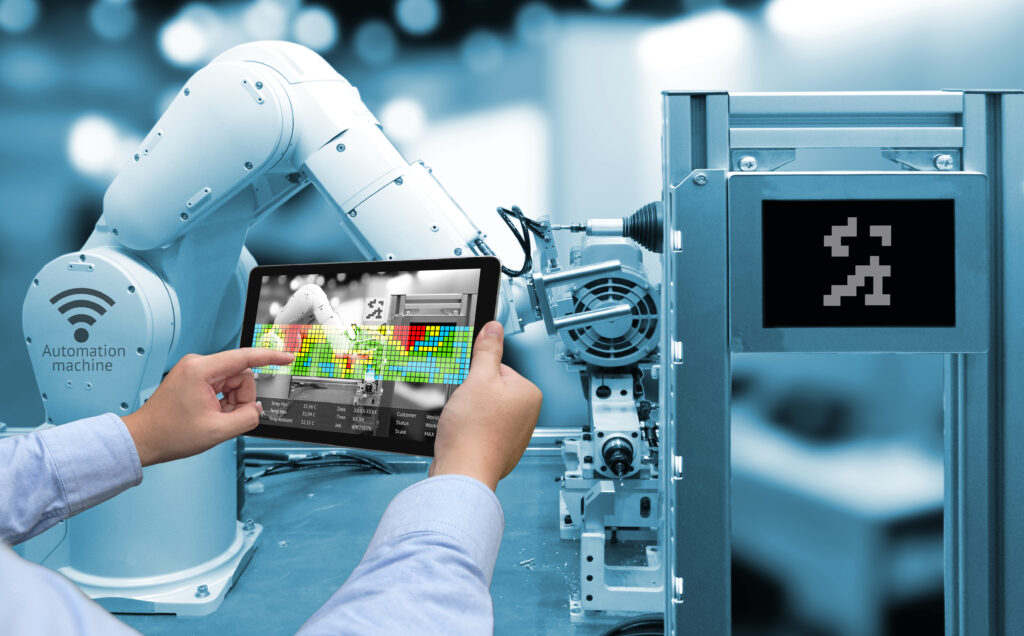
 Mechanical, electronic and computer technologies allow food companies to fully automate production lines; they also control the flows of energy, materials and information, to the benefit of productivity and quality.
 Mechanical, electronic and computer technologies allow food companies to fully automate production lines; they also control the flows of energy, materials and information, to the benefit of productivity and quality.
Automation is also widely present in the food industry, thanks to mechanical, electronic and computer technologies for the control of all production processes. With automation it is possible to keep under control and monitor the flows of energy, materials and information. Food companies can count on partners who design, build and install customized solutions, integrated with hardware and software components.
Process automation provides technologically advanced solutions, thanks to the configuration and development of DCS and PLC architectures, as well as SCADA software and operator panels, for individual machines or entire production lines. The automation of production processes improves the results and efficiency of the plants, regardless of the company’s size.
得益于自动化,食品公司可以使用高质量的解决方案,更好的选择和处理时间以及更快的生产线,包括包装流程。这导致成本较低。公司能够灵活地应对市场动态和食品行业不断发展的需求。实际上,消费者一直在寻找新的高质量产品,可能以低廉的价格以食品安全为先决条件。此外,市场越来越全球化。
In a competitive scenario like this, it is strategic to respond to market demands quickly, leaving nothing to chance. Computerized production ensures access to important information, up-to-date, continuous and shared with all those involved. It improves performance, productivity and asset utilization, while reducing the risks and optimizing resource management.
Digitization at the service of food companies
根据罗马TRE大学的一项研究,由Unione Italiana Food委托,该协会由两个最具代表性的意大利食品行业协会的联合会建立,Aidepi(Associazione delle Industrie del del del dolce e della e della Pasta Italiane)和Aiipa(Associazione italianaa italianaa italianaa pasta atalianaa italianaa pasta pasta)该部门的企业家对外贸,销售网络管理,原材料,生产过程和物流以及工作组织以及工作组织的关注。
因此,流程数字化是一个非常主题的问题,可以帮助食品公司在大流行后更成功地面对市场。由于生产工艺的自动化,消费者对新鲜,天然和安全食品的需求得益于更多使用自动化和机器人技术来确保新鲜度和卫生安全性。数字化还满足了实时可追溯性的需求,并且可以获得对提高生产过程效率有用的精确数据。
包装and labelling errors are reduced to a minimum if not eliminated, thanks to the use of integrated systems, which link the different production steps and provide real-time information, so that action can be taken promptly. Automation technologies also help prevent failures, with less downtime and waste. The operator can remotely control the operation of the machines and exchange information and data between management and production.
减少产品和原材料的能源消耗和废物是食品公司通过新的自动化技术可以获得的其他好处。连续监视辅助生产的各种服务,使操作员能够采取最佳措施,并做出最佳决策,以确保最低消费量的最高效率。

Control and supervision systems
AISI 304和316不锈钢的电动面板在控制和监督系统中发挥了基本作用,符合主要食品法规的要求,以提高该行业的生产率,以自动化包装,包装产品,揉捏产品线和揉捏产品和搅拌机,包装线,印刷机,弹性,层压板,刀具等。
A fully automated process in food companies is provided by Cleaning In Place Systems, that control, supervise and manage the washing cycles, as well as by the Integrated Data Collection Systems for the management of the traceability of raw materials, such as in milk collection, logistics. The need to reduce consumption and increase the competitiveness of international markets leads companies to invest in optimization software solutions.
Software development activities include supervision, efficiency of production lines, energy management, MES applications, integrated analysis of all KPIs (Key Performance Indicators), a set of quantifiable measures that a company uses to assess its performance over time. In particular, the computerized制造执行系统(MES)允许计算公司生产的管理和控制,从原材料到成品。
An MES system is created with the purpose of connecting the company management system (ERP) with the control systems of the machines in the productive and logistic departments, in order to optimize these processes and the control of resources and product quality. The main functions of an MES system concern the automatic acquisition of machine data, the sending of production orders, the production progress of semi-finished products/finished products in terms of quantity and time and their placing in stock, the type of controls to be carried out, the frequency and the non-conformities detected.
MES系统能够将所有信息数字化,从机器中自动收集处理数据,并将生成的零件传输到库存中。在自动化过程中,有SCADA(监督控制和数据获取)系统,即控制,监督和数据采集。得益于人机界面(HMI),监督使操作员能够观察过程的状态并控制其演变;这通常是通过对操作员立即理解的图形表示来表示的。
SCADA系统的控制功能允许修改过程,例如,通过更改过程必须运行的温度来修改过程。数据采集涉及将信息从外围设备传输到监督计算机,反之亦然。这是SCADA系统的主要功能,这要归功于该过程与监督进行通信,也就是说,它可以保证过程和监督之间的信息的精确传输。
SCADA系统的主要好处之一是,可以在许多重复和乏味的任务中取代操作员,从而提高生产率,并更好地警报管理。与云相关的高级分析应用程序的开发,以便随时可用,对于食品行业的自动化也至关重要。所有这些都归功于IT基础架构,这些基础架构允许对公司部署的各种自动化资源进行智能管理。
处理自动化软件完美地集成到食品公司的工厂中。PLC软件用于控制和管理食品和植物,从原材料的接收到从制冷,巴氏灭菌,灭菌,干燥,再到包装的各种热处理。它们也通常用于CIP线。
A panel allows operators to monitor the various production steps, as well as the operating parameters, such as open or closed valves, stationary or running machines, temperature, pressure values, and so on. The connection to ERP systems (Enterprise Resource Planning) allows a complete control of all operational phases, including operating reports, production parameters, operating cycles, maintenance in different sections of the company, from production lines to warehouse. Food companies often have to work 24 hours a day 24, 7 days a week, which is why automation systems need to be reliable.
 Automated Warehouses
物流是具有最佳利用自动化的部门之一。许多仓库和物流平台都安装了无线接线和采用智能采摘系统,即使通过语音控制。自动仓库越来越频繁,既有来自生产的托盘系统,又有用于自动仓库或运输的托盘。
例如,自动化允许通过条形码读取器识别不同的托盘,自动标记并通过形状控制系统检查尺寸。还有一些系统可以将不同的托盘路由到他们的目的地,或者如果发现缺陷,则丢弃相关的托盘。托盘处理系统允许食品公司减轻运输和卡车装载区域的工作量,并加快即使对于运营商的安全性,也将更加安全地进行。
通常,自动化的仓库有助于提高存储容量并增强现有的创新现有站点,从而改善了仓库活动的协同作用。实时遵循活动,并具有更大的工作流程连续性。摄像机和WCS软件(仓库管理系统)旨在管理和优化分销平台的所有物流过程,从而确保植物状态的实时显示。自动仓库只是食品公司可以选择改善物流绩效的解决方案之一。


